What a 1969 Freight Truck Still Teaches About Running a Logistics Business
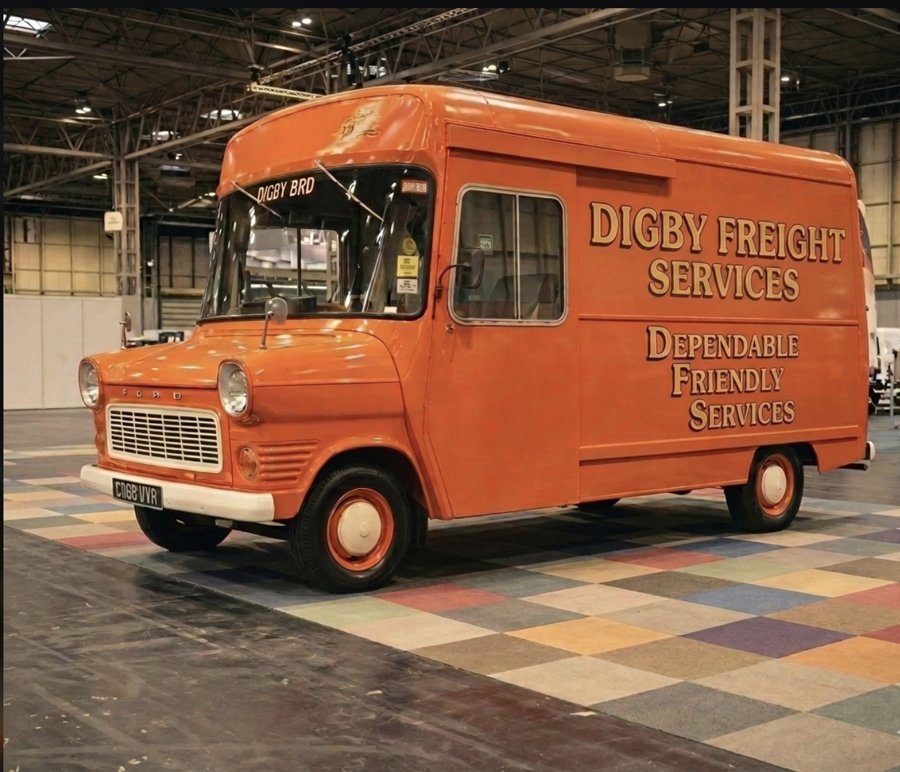
My uncle bought one truck in 1969. Ford, orange, a box on the back barely big enough for a full day's deliveries. He had it painted with three words: Dependable. Friendly. Services. That was Digby Freight Services, and for a long time, that truck was the entire company.
I've thought about that truck a lot over the years, first as a kid riding along, later as someone who built and ran a logistics company of my own, and now as a consultant who spends most of his working hours inside other people's freight operations. The truck's promise has held up better than almost anything else I learned in a Wharton classroom.
Dependable is a schedule, not a personality trait
People use the word dependable like it describes a person's character. In freight, it describes a schedule. A dependable operator is one whose customers stop building slack into their own plans because they've learned they don't need to. That's the actual test: not whether you mean well, but whether the people downstream from you have quietly adjusted their expectations to match your reliability.
My uncle's trucks weren't dependable because he cared more than his competitors. They were dependable because he built the business around never promising a time he wasn't sure he could hit. That's a strategic choice, not a personal virtue, and it's one I still see logistics companies get backwards. They oversell capacity to win the account, then spend the relationship apologizing.
Friendly is what makes dependable sustainable
A business can be dependable and miserable to deal with. Plenty are. What kept customers loyal to a single-truck operator in a market full of bigger, cheaper competitors was that dealing with DFS didn't feel like a transaction. My uncle knew the names of the people signing for deliveries. He knew which loading docks were a headache and planned around it without making it the customer's problem.
That's not a soft skill you can bolt onto an operation later. It has to be part of how the business is built, because the moment things go wrong (and in freight, they always eventually go wrong) the friendliness is what buys you the benefit of the doubt while you fix it.
The trucks are gone. The standard still runs every engagement I take on.
What this means for a modern operation
I don't think every logistics company needs to paint a motto on the side of a truck. But I do think most of the operational problems I get called in to help with trace back to one of these two words getting quietly dropped somewhere along the way. Dispatch stops giving realistic ETAs because the sales team already promised something unrealistic. Account managers stop calling with bad news early because nobody wants to be the messenger. Both of those are the DFS standard breaking down, just with more layers of management between the truck and the customer.
When I walk into an operations review now, dependable and friendly are still the two questions underneath everything else I'm actually measuring: technology, staffing, workflow, compliance. Fix those without fixing the two words, and you've built a faster way to disappoint people.
If that sounds like a problem your operation has, that's exactly the kind of conversation DFS Consulting exists for. Get in touch, or send a message straight to WhatsApp.